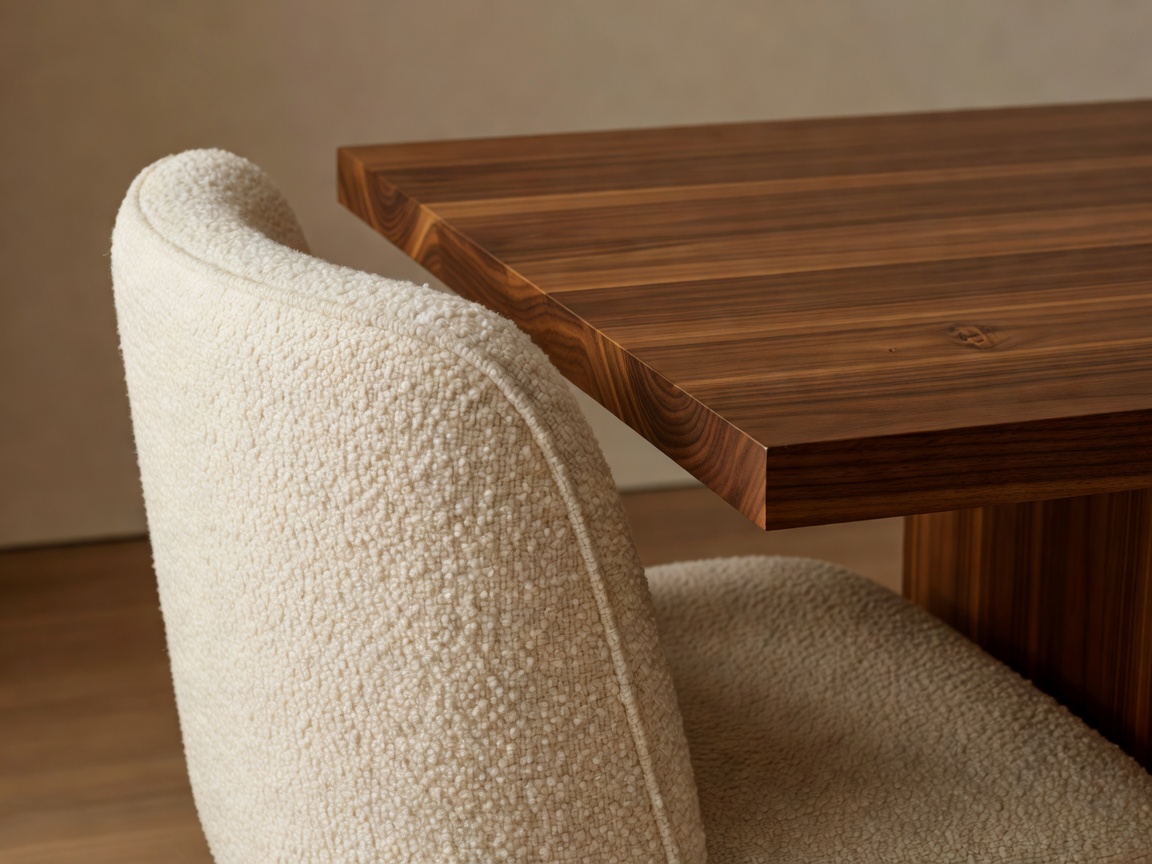
A guest rarely describes comfort in furniture specifications. They notice whether their shoulders relax, whether their knees fit and whether they can move without disturbing a neighbor. For a restaurateur, those experiences intersect with cleaning, durability, storage and the rhythm of service. Start with the kind of meal you intend to host, then evaluate the complete setting rather than choosing a chair from an appealing photograph.
Test a meal, not a moment
A quick sit in a showroom can miss the conditions that matter during dinner. Arrange a sample chair with the proposed table, tableware and lighting. Invite people of different heights and body shapes to sit, reach for water and stand again. Ask about pressure at the front edge, back support and the effort required to move closer to the table. Record differences rather than averaging them away.
Test armrests under the actual tabletop and apron. Check whether a central table base leaves usable foot space or creates an awkward obstacle. Soft upholstery may compress enough to change the relationship between seat and table. A fixed bench that feels generous when empty can become difficult to enter once another diner is seated beside it.
Compare the trade-offs honestly
No seating type solves every problem. A banquette can make a wall feel welcoming and help organize a room, but it also fixes a particular sitting position. Freestanding chairs offer choice, yet their movement needs room. Counter seating may suit a short solo visit while excluding guests who cannot comfortably climb onto a high stool. Provide a meaningful alternative rather than presenting one format as universal.
| Format | Useful quality | Test before ordering |
|---|---|---|
| Upholstered chair | Support and tactile warmth | Cleaning, seam durability, weight and seat compression |
| Timber chair | Visual lightness and a wipeable surface | Edge pressure, back shape and floor noise |
| Banquette | A defined edge and a sheltered feeling | Entry, posture, table base and repair access |
| Counter stool | Compact seating near activity | Foot support, stability and an equivalent lower option |
| Movable table | Adaptability for different groups | Stable combinations and clear routes in each arrangement |
Use this comparison as a shortlist, not a ranking. A lively lunch counter and a long tasting-menu service create different demands. Where possible, offer several types of comfortable seat without relegating the most adaptable table to the least attractive corner.
Put occupied furniture on the plan
Furniture footprints tell only part of the story. A person entering a chair needs a different envelope from someone already eating. Staff approaching with a plate need space that is not borrowed from a neighboring table. Draw and mock up those movements before confirming capacity. Avoid treating any general spacing figure as automatic evidence of compliance; local requirements and the actual configuration still govern.
Think about bags, coats and walking aids too. Hooks or nearby storage can help, but only if guests can reach them and belongings do not project into circulation. A bag placed on a spare chair may signal that the room has not provided a better option. Watch how guests solve these problems and improve the setting instead of repeatedly correcting their behavior.
Specify for daily care and long use
Ask suppliers for intended-use information, cleaning instructions and relevant test documentation. EN 16139 concerns strength, durability and safety requirements for non-domestic seating; EN 1022 concerns seating stability. ANSI/BIFMA X5.4 addresses public and lounge seating. Their scopes and editions matter, and naming a standard does not establish that a particular chair meets it. Verify the evidence with the supplier and your project advisers.
Try the approved cleaning process on a sample, including seams and textured surfaces. Consider replaceable glides, repairable joints and removable upholstery components. Specify floor protection that suits both the chair and the floor finish. Reducing scrape noise can improve the room, but a poorly matched glide can make a chair unexpectedly difficult to move.
Finally, include the team who rearranges and cleans the room. An elegant chair that is awkward to lift can become an everyday burden. A maintainable selection protects the original design because staff can keep it working well. Comfort is therefore not just cushioning: it is the result of posture, movement, choice and consistent care.