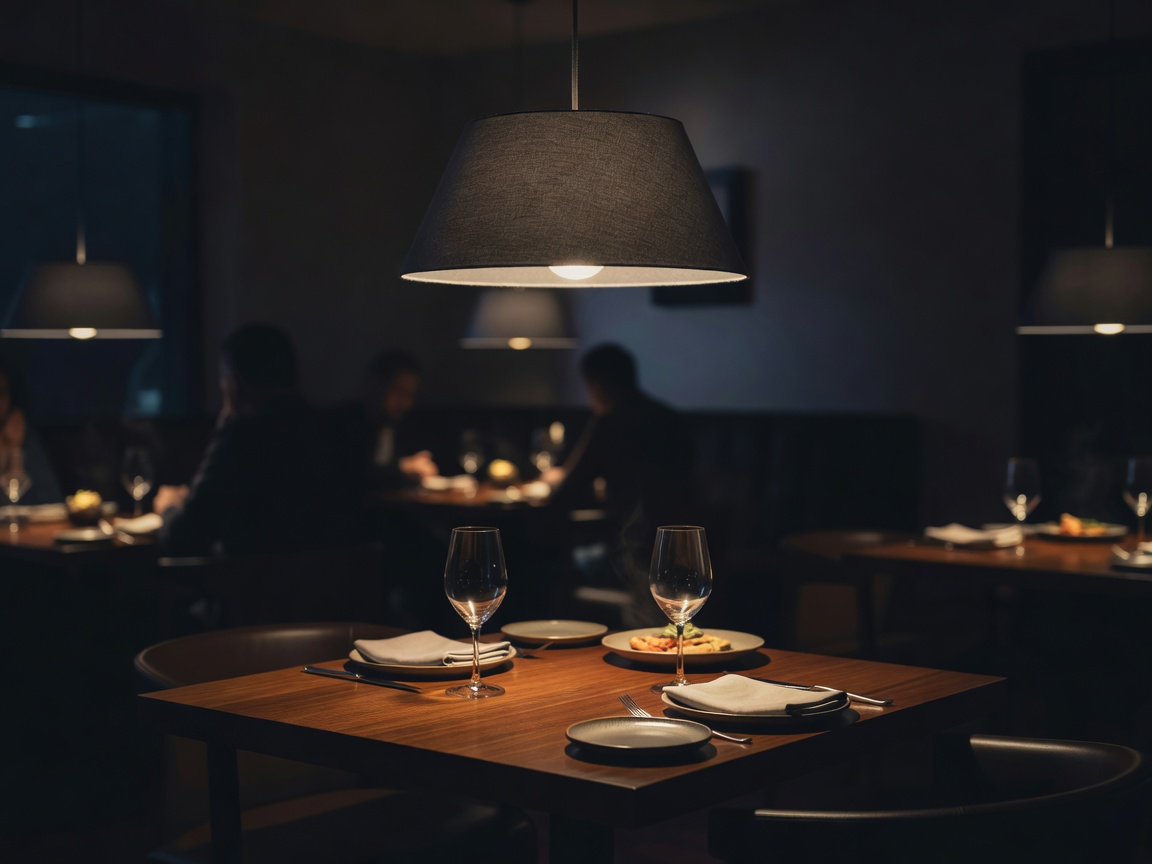
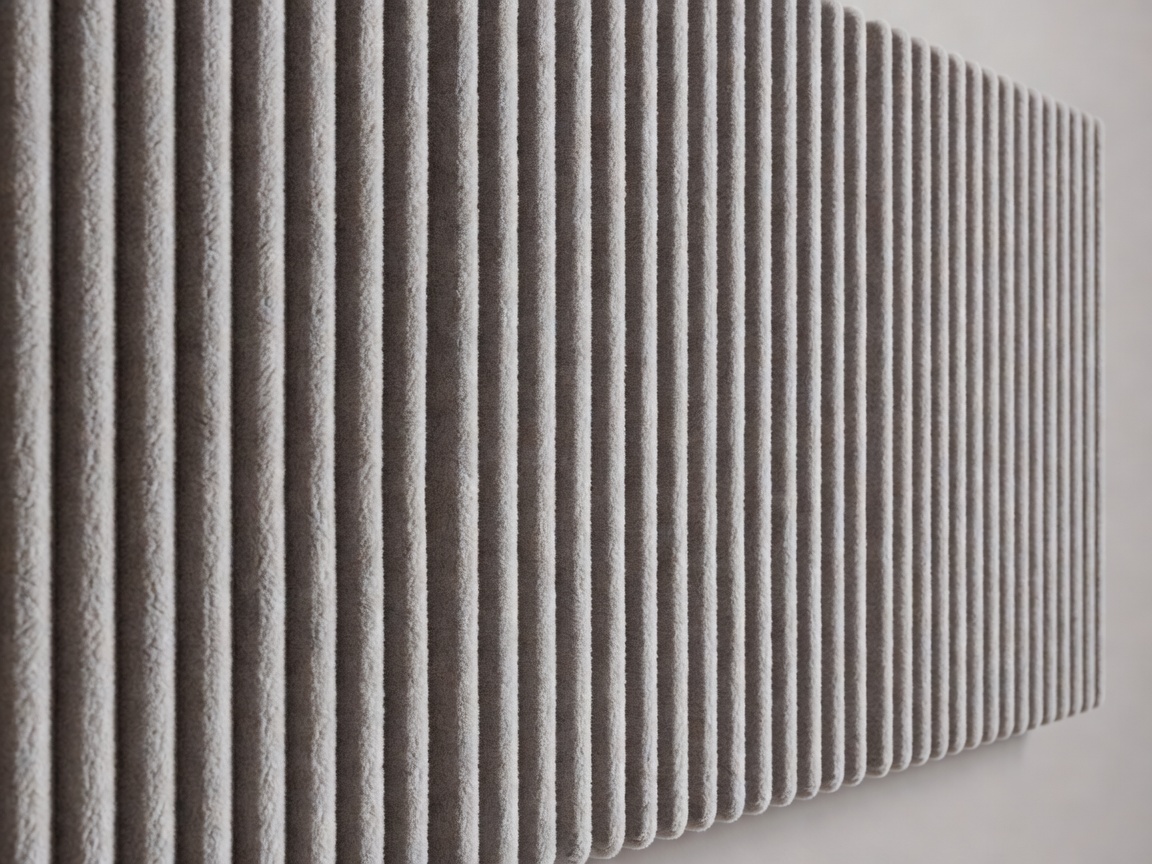
Light and sound share a practical truth: their sources are only part of the experience. Reflections, surfaces, furniture and the position of a guest all influence what is perceived. A pendant that photographs beautifully may put its brightest point directly into a seated person's eyes. A soft-looking wall covering may absorb little useful sound. Begin with the experience you want, then test the whole room rather than collecting attractive objects.
Layer the light around real tasks
Separate general orientation, table illumination and operational tasks. Guests need to read a menu and recognize the route to a restroom. Servers need to identify dishes, see spills and work at service stations. An accent on a wall or artwork can give the room depth, but it cannot substitute for those tasks. Decide which sources serve which purpose before selecting decorative fittings.
Evaluate light from a seated position at several tables. Look toward the bar, windows and neighboring pendants. Shield direct views of intense lamps and check reflected glare in mirrors, polished tables and glass. Soft light on faces often feels more welcoming than a single steep beam. A low pendant also changes sightlines; verify that it does not obstruct conversation or staff visibility.
Review samples of finishes and food under the proposed lamps. Correlated color temperature describes one aspect of a source, not its complete color quality. CRI and the IES TM-30 method provide different ways to discuss color rendering, but no isolated score guarantees an appealing dining scene. Ask a lighting professional to interpret specifications in the context of your menu, materials and controls.
Rehearse the change from daylight to dinner
A room that works at noon may fail after sunset. Create simple lighting scenes for preparation, daytime service, evening service and cleaning. Keep controls understandable so the team can restore a known setting. Test dimmer and lamp compatibility for flicker, audible noise and unstable low settings. Do not assume that every fitting will dim smoothly just because its packaging says dimmable.
Window treatments can reduce glare, but they also affect views, maintenance and the feeling of welcome from the street. Walk the room at different times and document the difficult seats. Emergency lighting and other safety provisions require their own qualified design and verification; atmosphere must never depend on compromising them.
Treat the room before turning up the music
Hard surfaces reflect sound back into a room. As conversation becomes harder to follow, people may speak more loudly, making the overall condition worse. Start by identifying sources: kitchen openings, grinders, ventilation, chair movement and loudspeakers. Reducing an avoidable source or moving a noisy task can be more effective than adding a decorative panel nearby.
Absorption reduces reflected sound within a space; sound isolation limits transmission between spaces. They are different problems. A soft ceiling treatment might improve the dining room while doing little to prevent music reaching a neighboring property. Ask an acoustician to identify the issue before buying a solution.
Request test data for the actual product and installation. ASTM C423 and ISO 354 describe laboratory methods for measuring sound absorption. Performance can change with thickness, mounting, coverage and air gaps. NRC is a summary rating, not a complete picture of frequency-dependent behavior. A narrow felt strip should not be assumed equivalent to a properly designed absorbing system.
Listen when the room is occupied
Empty-room impressions are useful but incomplete. Guests add both absorption and sound. During service, sit at a table near the kitchen, one beneath a speaker and one in a quieter zone. Notice whether you can follow a companion without leaning forward or repeatedly asking for clarification. Invite feedback from people with different hearing needs, and avoid assuming one preferred sound level works for everyone.
Use phone sound readings only as rough observations, not compliance measurements or professional acoustic analysis. Review the music level, speaker coverage and staff routines alongside material changes. A quieter table option, clearly offered when available, can make an immediate difference while a larger improvement is being planned.